Why Spring Thaw Wreaks Havoc on Retaining Walls
If you live in Madison, you know the drill: winter freezes the ground solid, then spring arrives and everything thaws at once. That cycle is brutal on retaining walls. As soil freezes, it expands and pushes against the wall. When it thaws, the soil becomes saturated and heavy, and the water has to go somewhere. If drainage is poor, hydrostatic pressure builds up behind the wall and literally pushes it forward. That is why so many homeowners notice a lean, a bulge, or a new crack right around March and April.
The good news is that not every leaning wall is a goner. Sometimes the movement is cosmetic or limited to a small section. Other times, the wall has rotated at the base or the footing has failed, which is a bigger deal. The key is to diagnose the cause before you decide whether to patch it up or tear it down. A wall that is leaning because of trapped water needs a drainage fix, not just a cosmetic patch. A wall that is leaning because the footing is undermined needs structural attention. Understanding the difference is the first step toward making a smart decision for your property.
Signs Your Leaning Wall Can Be Repaired
Not every lean means replacement. If the wall is less than a few years old and the movement is minor, there is a good chance that Retaining Wall Repair is the right call. Small cracks (hairline or narrower than a quarter inch), slight tilting that has not worsened over time, and localized bulging are all candidates for repair. The fix often involves improving drainage behind the wall, replacing a few damaged blocks or stones, and reinforcing the section that moved. In many cases, a professional can also install weep holes or a French drain to relieve the pressure that caused the problem in the first place.
Another sign that repair is viable is when the wall is still structurally sound at the base. If the footing is intact and the wall has not rotated significantly, repair is usually faster and less expensive than a full rebuild. Homeowners in Middleton and Fitchburg often find that a targeted repair solves the issue without disrupting their landscaping. The key is to act early. A small lean that is ignored for a few seasons can turn into a major structural problem, especially with Wisconsin's freeze-thaw cycles.
When Replacement Is the Only Safe Option
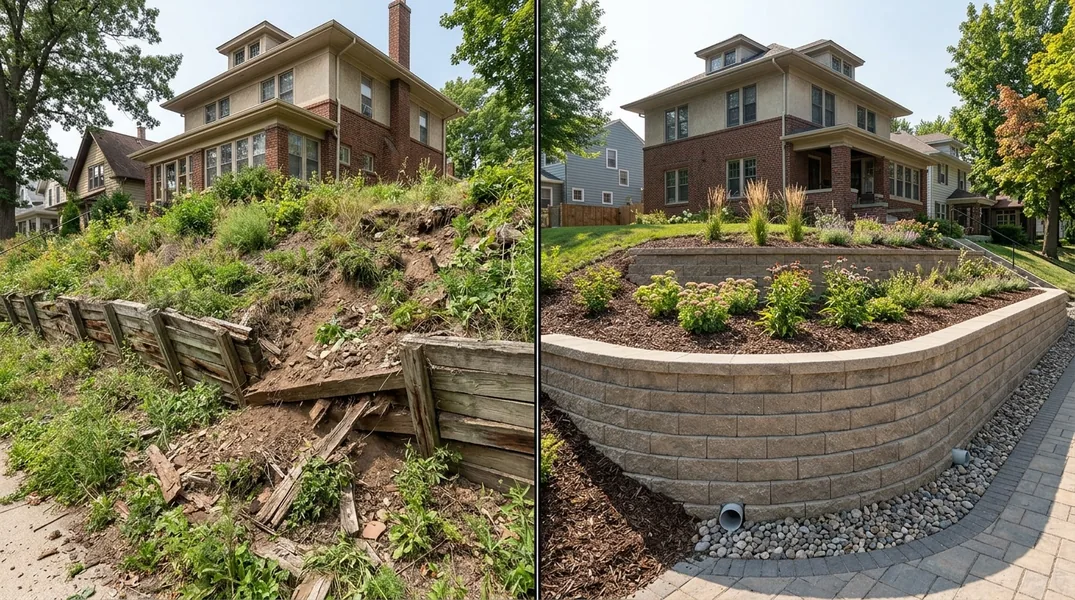
Sometimes the damage is too extensive for a patch. If the wall has rotated more than a few inches, if the blocks are crumbling or shifting throughout the entire length, or if the footing has settled unevenly, replacement is usually the safer and more cost-effective long-term choice. A wall that is visibly bulging in the middle, has wide cracks that go all the way through the blocks, or is leaning outward at the top is telling you that the structural integrity is compromised. Patching a wall like that is like putting a bandage on a broken bone: it might look better for a season, but it will fail again.
Replacement also makes sense when the original wall was poorly built. If the wall lacks proper drainage, was built with inadequate base material, or was never engineered for the soil conditions on your lot, you are better off starting fresh. Modern Concrete Retaining Walls are designed to handle Madison's freeze-thaw cycles and heavy clay soils, and they can be built with proper drainage from day one. A full Retaining Wall Replacement is a bigger investment, but it gives you a wall that will last for decades instead of a temporary fix that will cost you more down the road.
Retaining Wall Crack Repair: What to Know Before You Patch
Cracks are one of the most common symptoms homeowners notice after spring thaw. But not all cracks are equal. Hairline cracks in concrete or mortar joints are often cosmetic and can be sealed with a flexible caulk or patched with masonry filler. Wider cracks, especially those that are wider at the top than the bottom, or cracks that run diagonally across blocks, are warning signs of movement. If you see a crack that is wider than a quarter inch, or if the two sides of the crack are no longer level with each other, that is a sign of structural movement that needs professional evaluation.
Retaining wall crack repair is not just about filling the gap. The real question is why the crack appeared. If water is getting into the wall and freezing, the crack will come back every winter. If the soil behind the wall is settling, the crack will widen. A proper repair addresses the root cause, not just the visible symptom. That might mean regrading the soil, adding drainage, or reinforcing the wall with anchors or geogrid. Before you reach for a tube of caulk, have a professional take a look. It is the difference between a fix that lasts and one that fails by the next spring thaw.
Retaining Wall Repair Near Me: When to Call a Professional
If you are searching for retaining wall repair near me in the Madison area, you are probably already past the DIY stage. While small cosmetic fixes are within reach for many homeowners, structural issues require an experienced eye. A professional can assess the wall's condition, determine whether the lean is caused by drainage, soil pressure, or footing failure, and recommend the most cost-effective solution. They can also tell you whether repair is realistic or whether replacement is the smarter investment. That assessment is often free, and it can save you thousands of dollars by preventing you from patching a wall that is beyond saving.
It is also worth calling a pro if the wall is taller than three or four feet, if it is holding back a significant slope, or if it is close to your home's foundation. These walls are structural, and a failure can cause serious damage to your property. Madison Retaining Wall serves homeowners throughout the area, including Sun Prairie, and can provide a thorough evaluation and a clear plan of action. You can call (608) 910-8974 or request a free estimate to get started. The sooner you address a leaning wall, the more options you have.
Repair or Replace: How to Make the Call
The decision between repair and replacement comes down to three factors: the extent of the movement, the age and condition of the wall, and the underlying cause. If the wall is relatively new, the movement is minor, and the cause is fixable (like poor drainage), repair is usually the right choice. If the wall is old, the movement is significant, or the footing is compromised, replacement is often the better investment. A professional assessment can help you weigh those factors and make a decision based on facts rather than guesswork.
Cost is also part of the equation, but it is important to look at the long-term picture. A repair that costs a few hundred dollars but fails again in two years is not a bargain. A replacement that costs more upfront but lasts for decades is often the smarter financial move. For a clearer idea of what to budget, you can review the pricing page or call Madison Retaining Wall at (608) 910-8974. Whether you need a small repair or a full Retaining Wall Installation, the team can walk you through your options and help you protect your property for the long haul.
Looking for a professional retaining wall contractor in Madison? Madison Retaining Wall responds fast for all your retaining wall needs.
Get a Free QuoteOur services: Retaining Wall Installation · Retaining Wall Repair · Retaining Wall Replacement